Everyone Wants the Perfect Setup
We all dream of giving our bearded dragon the best — but truthfully, most beardies aren’t housed right. Social media and pet stores often show off setups that are too small or poorly designed.

“A healthy dragon starts with a smart setup — not just what looks cool online.”
We all dream of giving our bearded dragon the best — but truthfully, most beardies aren’t housed right. Social media and pet stores often show off setups that are too small or poorly designed.
Without the right start, your dragon could end up stressed, underheated, or stuck in a cramped tank. That’s why we created The Big Sky Bundle™ — to make it easy to do things right from day one.
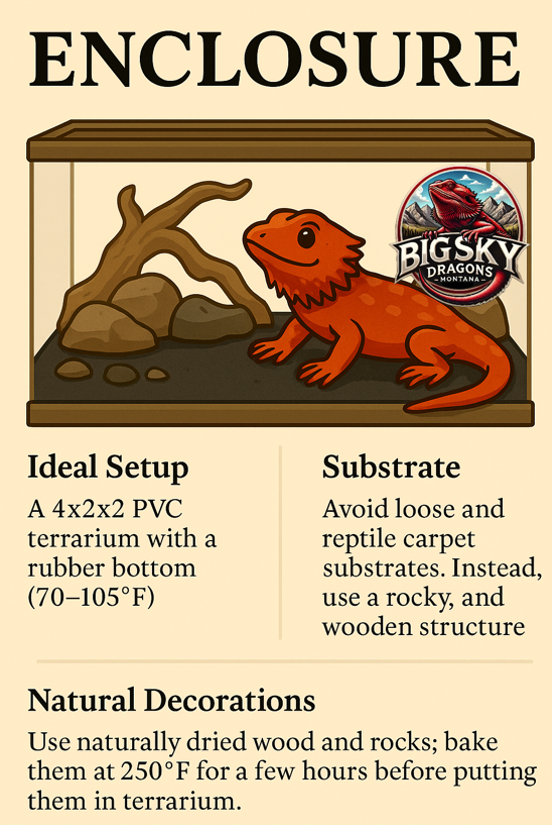
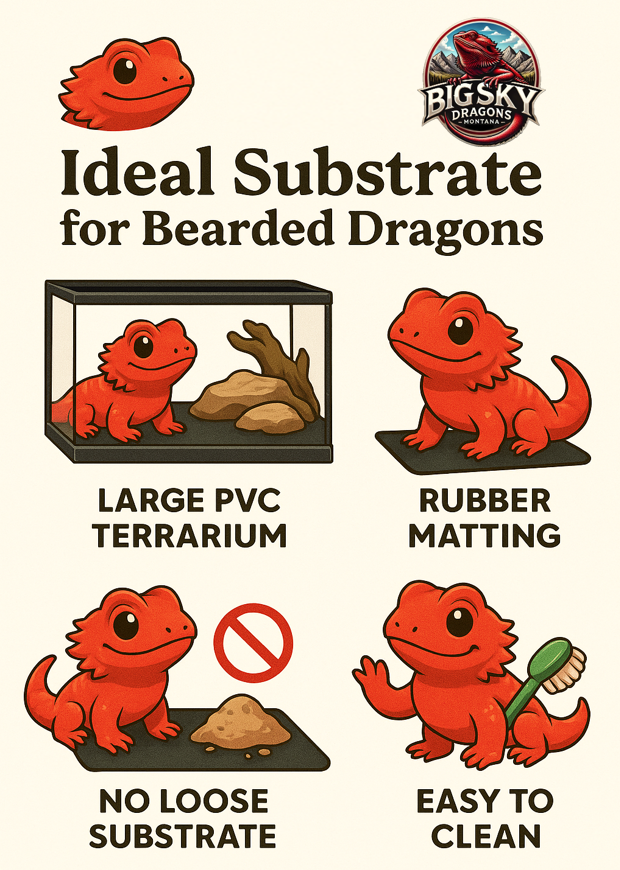
Every bearded dragon deserves a habitat that reflects their needs—not just for comfort, but for long-term health. We recommend a spacious 120+ gallon PVC terrarium (minimum 4x2x2 feet) with a solid rubber mat base. It’s durable, easy to sanitize, and helps support stable footing.
Our honest advice on substrate? Skip it. After testing every option, we’ve found that no substrate is the cleanest and safest approach. This can be controversial, but read our Substrate section below for more details. Instead, use rubber matting and fill the space with rugged wood and natural stone to mimic their wild terrain.
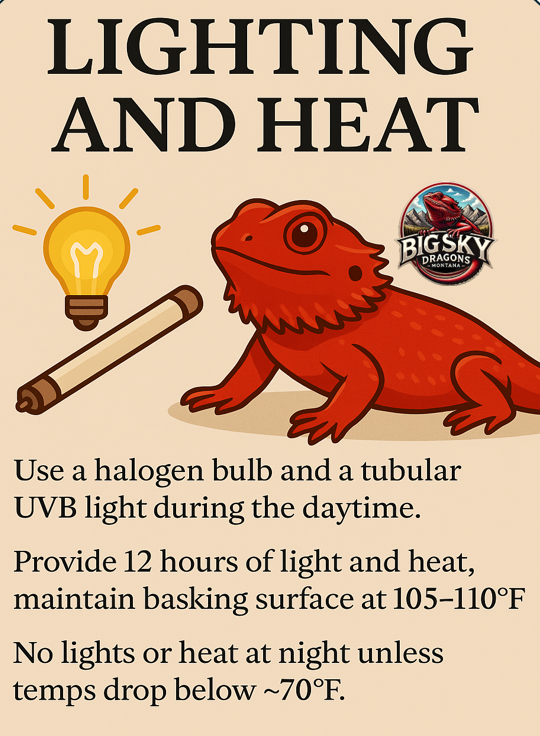
Lighting and heat are more than just comfort—they’re survival essentials. During the day, we use a 100W incandescent bulb paired with a tubular UVB light. Your dragon’s hottest basking surface should reach about 110°F by mid-afternoon, with cooler zones still around 80°F by late day. We seasonally adjust our bulb wattages.
To maintain a consistent schedule, we recommend setting up a smart timer strip. Our top pick is the Kasa Smart Plug Power Strip HS300 from Amazon. Aim for 12–14 hours of light and heat daily. We go 14 hours a day in the summertime.
UVB is non-negotiable. We use the Arcadia D3 Dragon 12–14% 24W tubular UVB light—crafted in Germany and known for quality. Mount it inside the enclosure, angled toward the basking zone—never behind glass or mesh. Use twisty ties to position your UVB, and ensure your dragon stays at least 12 inches away from the bulb. Replace Arcadia bulbs every 12 months (other brands every 6), since essential UVB fades long before the visible light does.
At night, all lights go off—no heat, no glow, unless your room consistently drops below 65°F.
And don’t forget nature’s light: when weather allows, offer your dragon supervised sunlight in short sessions (20 minutes at a time, up to an hour per week). Use a white or clear bin—never black, which can reach fatal temperatures under direct sun.
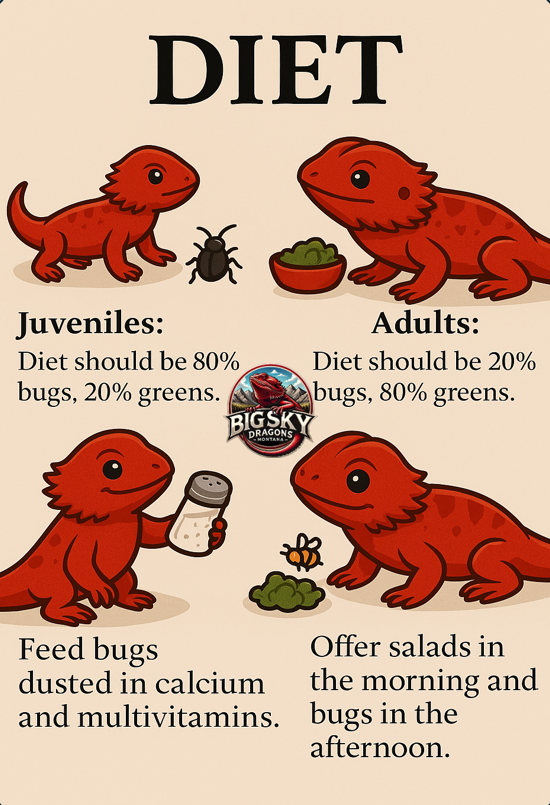
Diet should be 80% bugs, 20% greens. Feed small bugs, dusted in calcium powder and a multivitamin, 2–3 times a day.
Diet should be 20% bugs, 80% greens. Offer salads in the morning and bugs in the afternoon. Dust bugs in calcium and multivitamins 2–3 times a week.
Salads should be small — about the size of a golf ball when compacted.
Top staples include:
Avoid salad greens like kale, spinach, and lettuce — they’re not as nutritious for bearded dragons.
Add a sprinkle of bee pollen to enhance appeal. If your beardie refuses to eat their salad, skip the bugs for the day to encourage healthy habits.
Dubia roaches are our overall favorite staple feeder.
Other safe options include:
Never feed wild-caught bugs — they often carry harmful parasites like pinworms.
Once a month, treat your beardie to hornworms for a nutritious and hydrating snack.
For premium nutrition support, lightly dust feeder insects with calcium powder twice per week and a reptile multivitamin once per week before offering them to your dragon.
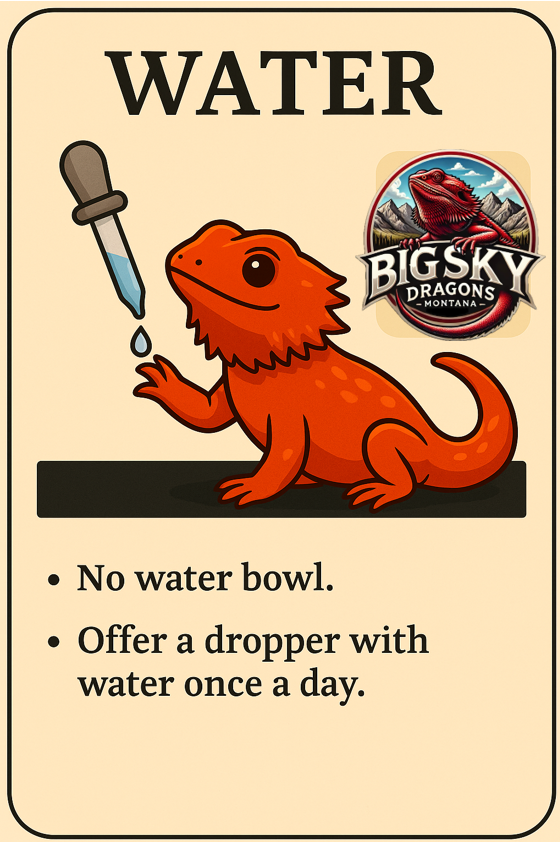
In the wild, bearded dragons don’t sip from ponds or puddles. They stay hydrated by absorbing moisture from fresh greens, insects, and morning dew.
That’s why we recommend no standing water bowl in the enclosure—it often goes ignored, gets contaminated, and increases humidity unnecessarily. Instead, offer a few gentle drops of water from a dropper once per day. If your dragon is thirsty, they will lick the water as it comes out of the dropper.
Keep things natural, clean, and stress-free. Hydration should mimic their instincts—not fight them.
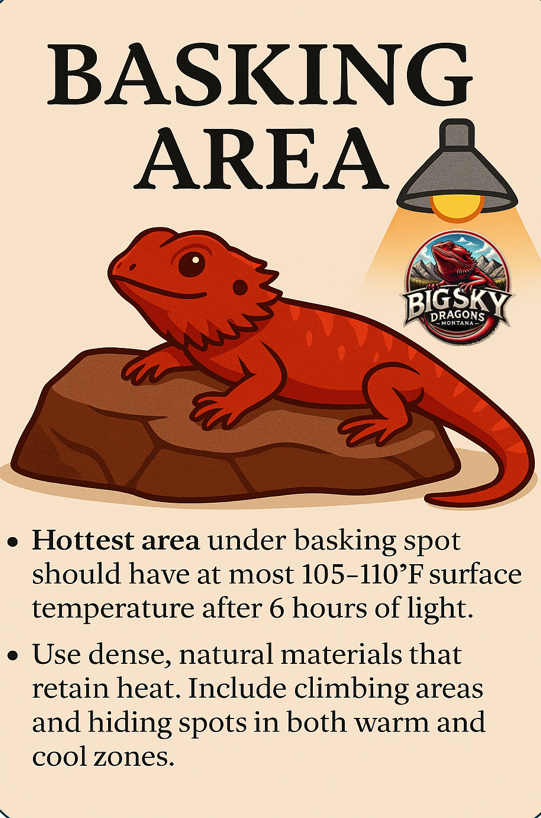
The hottest elevated surface directly under the basking bulb should reach a maximum surface temperature of about 107–112°F after 10 hours of light exposure.
Choose dense, natural materials like rock or wood that retain heat gradually. Avoid plastic or resin basking structures — they heat too quickly and can cause burns, and they are much harder to sanitize thoroughly after a mess. Natural wood and rock can be heat-sanitized more effectively when needed, and they hold warmth longer so your bearded dragon can settle near them comfortably if temperatures dip overnight.
Include a couple of climbing areas and a hiding spot in both the warm and cool zones of the enclosure. This promotes healthy thermoregulation and natural behaviors.
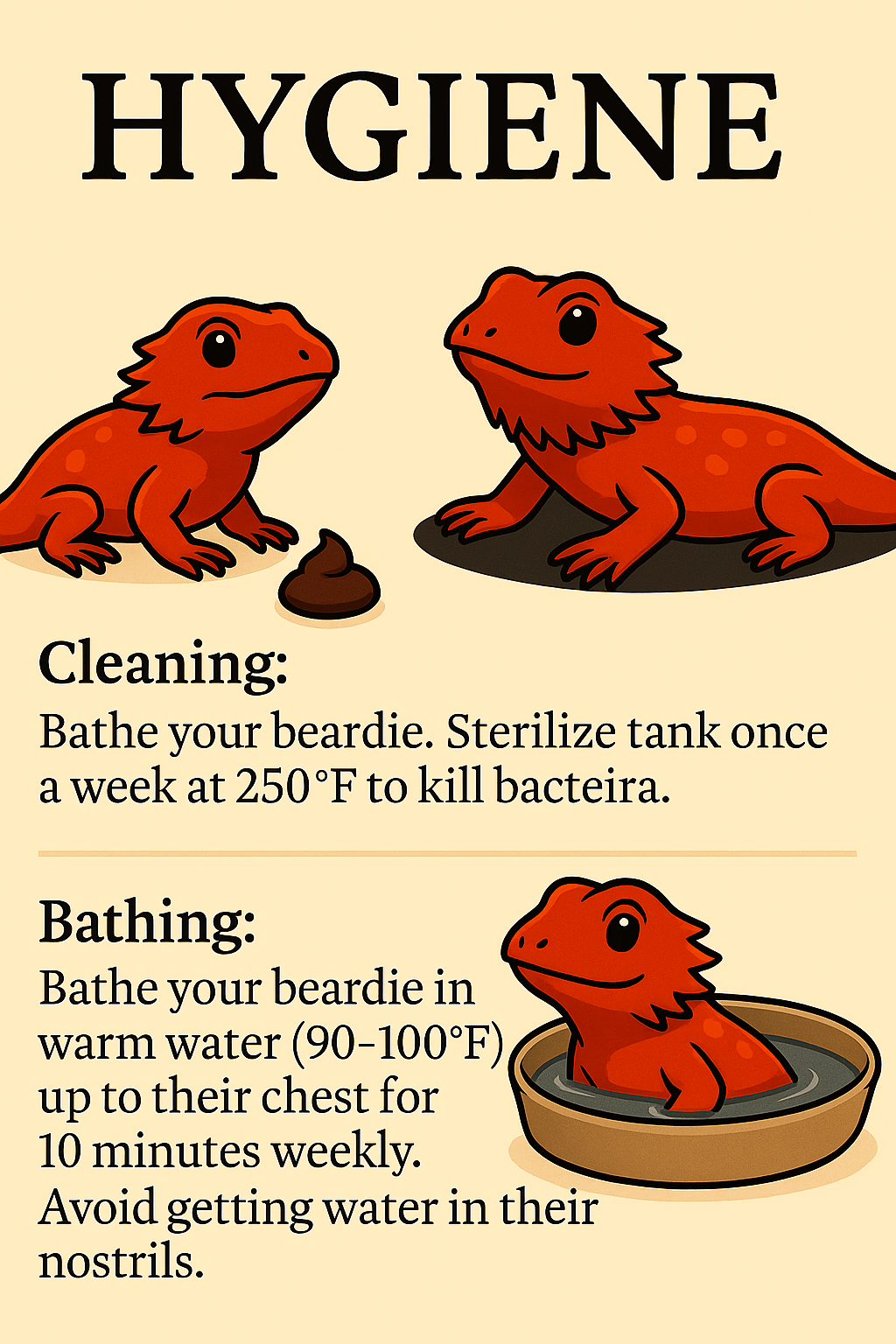
Use reptile-safe veterinary disinfectants as directed and always clean in a well-ventilated space.
Always remove stool promptly to prevent harmful bacterial growth.
For daily spot cleaning, use 3–4 hydrogen peroxide wipes to completely remove all material and wipe the surrounding surface clean. Keep your beardie away until the area is fully dry.
Recommended Method: Steam & Bake
Twice-Yearly Deep Clean: Diluted Veterinary F10
During deep cleaning: Keep your dragon out of the cleaning zone while surfaces are being treated, and return them only after everything is fully dry and ready.
Bearded dragons didn’t evolve in dusty sand dunes—they come from the rugged Australian Outback. Their natural terrain is firm and stable, made up of compacted clay, sturdy rocks, and hardened wood.
While patches of sand do exist in their native habitat, it’s dense and packed—not the soft, shifting kind sold in pet stores. Loose sand, crushed walnut shells, and similar substrates can pose unnecessary health risks and simply don’t reflect what these reptiles are built for.
Beyond concerns about impaction (which are often overstated), loose substrates can become a breeding ground for protozoa and parasites. These aren’t something to panic over—but they are something to prevent.
Don’t worry—most parasites that affect bearded dragons are species-specific and cannot be transmitted to humans. But if left unchecked, they can impact your dragon’s health and energy levels over time.
That’s why at Big Sky Dragons, our reptiles are examined annually by certified ARAV reptile veterinarians. When your dragon comes from us, it’s starting life clean and healthy. The real concern is what might be introduced later through improper substrate.
For a safe and practical setup, we recommend using sanded tile, slate, newspaper, or our favorite: rubber matting like shelf liner. These surfaces provide good traction, are easy to clean, and help keep your dragon's habitat both natural and sanitary.